
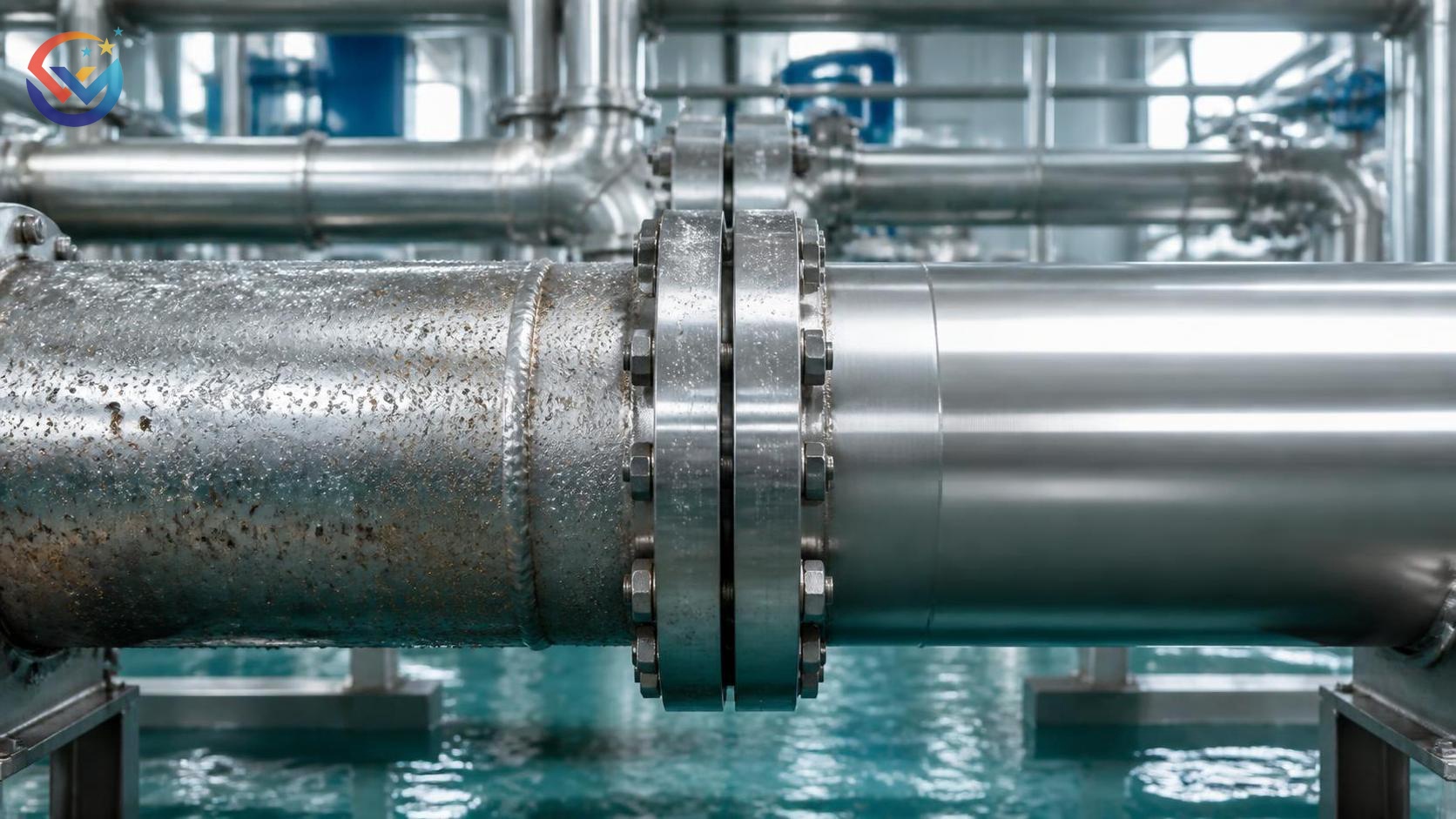
Stainless Steel Pipe is widely chosen for its strength and corrosion resistance, yet chloride-rich environments can still trigger unexpected failure and costly downtime. For after-sales maintenance teams, understanding why this happens is essential to extending service life, reducing repair frequency, and protecting system safety. This article explains the main causes of chloride-related damage and outlines practical prevention methods for more reliable field performance.
For most maintenance teams, the key point is simple: stainless steel pipe does not fail in chloride service because stainless steel is weak, but because the wrong grade, surface condition, temperature range, or maintenance practice allows localized corrosion to start.
Once that corrosion begins, damage can move faster than many field teams expect. Small pits, crevice attack, or chloride stress corrosion cracking may remain invisible at first, then suddenly lead to leakage, contamination, shutdowns, or costly replacement work.
If your system handles seawater, brine, cleaning chemicals, coastal moisture, or process fluids containing chlorides, the practical question is not whether Stainless Steel Pipe can work. The real question is under what conditions it can work safely and for how long.
Why does Stainless Steel Pipe fail in chloride environments even though it is corrosion resistant?
Stainless steel resists corrosion because a thin passive oxide film forms on its surface. This film is stable in many industrial conditions, but chloride ions can break down that protective layer, especially in stagnant, warm, or oxygen-variable environments.
When the passive film is damaged and cannot reform quickly, corrosion becomes localized. That matters because localized attack is far more dangerous than uniform corrosion. A pipe may still look sound overall while a small area is already approaching failure.
For after-sales maintenance personnel, this is the first important judgment: a system can appear clean externally and still be at risk internally. Chloride-related failure often begins in hidden zones such as dead legs, gasketed joints, under deposits, or poorly drained sections.
This is also why two stainless pipe installations using similar material can perform very differently. One line may run for years, while another fails early because chloride concentration, temperature cycling, or cleaning residue changes the service conditions.
What types of chloride damage should maintenance teams watch for first?
The most common chloride-related failure modes in Stainless Steel Pipe are pitting corrosion, crevice corrosion, chloride stress corrosion cracking, and in some cases under-deposit corrosion. Each one develops differently and requires different inspection attention.
Pitting corrosion starts when chlorides attack a small weak point on the passive surface. The pit grows downward and inward rather than spreading evenly. Because metal loss is concentrated, a small pit can penetrate pipe wall faster than general corrosion would suggest.
Crevice corrosion develops in narrow shielded areas where oxygen access is limited. Common field locations include flange faces, threaded areas, clamp connections, gasket interfaces, supports, and deposits trapped beneath scale or dirt. These locations deserve routine inspection priority.
Chloride stress corrosion cracking, often shortened to SCC, is especially serious because cracking can happen with little visible metal loss. It usually requires tensile stress, susceptible stainless grades, and elevated temperature in a chloride-containing environment.
Residual stress from welding, bending, forming, or improper installation can increase SCC risk. In practical maintenance terms, a pipe that appears structurally strong may still crack unexpectedly if chloride exposure and tensile stress remain uncontrolled over time.
Under-deposit corrosion is another field problem. Salt residue, process solids, and fouling deposits create micro-environments where chlorides concentrate. When water evaporates or flow is uneven, the trapped area becomes more aggressive than the bulk process fluid.
Why do some stainless grades fail much sooner than others?
Not all stainless steel pipe performs equally in chloride service. One of the biggest causes of early failure is assuming that all stainless grades provide the same corrosion resistance simply because they are labeled stainless.
Grade 304 Stainless Steel Pipe is widely used and performs well in many general applications, but it is relatively vulnerable in chloride-rich conditions. In coastal, brine, or chemical cleaning service, 304 may pit or crack sooner than expected.
Grade 316 Stainless Steel Pipe usually performs better because molybdenum improves resistance to pitting and crevice corrosion. Even so, 316 is not a universal solution. At higher chloride levels, higher temperatures, or stagnant conditions, it can still fail.
Duplex stainless steels and some higher-alloy grades often provide stronger chloride resistance, especially where both mechanical strength and corrosion performance matter. However, they also require proper fabrication, welding control, and cost justification based on the actual service environment.
For maintenance teams, the practical lesson is clear: grade selection should match chloride concentration, operating temperature, pressure conditions, flow pattern, and cleaning chemistry. Material upgrades should be based on service evidence, not on generic assumptions.
Which operating conditions make chloride attack worse in the field?
Chloride concentration is the first factor, but it is not the only one. Temperature often accelerates corrosion sharply. A Stainless Steel Pipe system that performs acceptably at lower temperature may become unreliable when process heat increases.
Stagnation is another major risk amplifier. When fluid remains trapped, chlorides can concentrate, oxygen levels can shift, and deposits can settle. Dead legs, idle branches, standby lines, and infrequently flushed systems often become the earliest failure points.
Surface contamination also matters. Iron contamination from tooling, welding residue, scale, or incomplete passivation can create initiation sites for corrosion. Maintenance teams should treat post-fabrication surface condition as part of corrosion control, not a cosmetic issue.
Cleaning practices can unintentionally worsen exposure. Chloride-containing detergents, disinfectants, or rinse water may leave residues behind. Repeated wet-dry cycles then concentrate salts, particularly on external pipe surfaces in coastal or washdown environments.
Mechanical stress adds another layer of risk. Poor alignment, over-tightened supports, thermal expansion restraint, and weld residual stress can all increase susceptibility to cracking. In chloride environments, stress management is part of corrosion prevention.
How can maintenance teams identify early warning signs before failure happens?
Early detection depends on looking beyond obvious rust or leakage. Small brown spots, tea staining, localized discoloration, roughness near welds, and residue buildup may all indicate that the passive layer is under attack or that chlorides are concentrating.
Pay close attention to weld heat-affected zones, flange joints, threaded transitions, supports, clamps, insulation terminations, and low-flow sections. These are the places where chloride-related problems often start long before the pipe body shows broad deterioration.
Leak history can also reveal patterns. If failures repeatedly occur in the same service loop, near the same chemical cleaning stage, or after shutdown periods, the root cause is often environmental concentration rather than random material defect.
Where system criticality is high, periodic thickness checks, borescope inspection, dye penetrant testing for suspected cracking, and water chemistry review can provide much earlier warning than waiting for visible perforation or pressure loss.
Maintenance logs should record fluid type, temperature range, shutdown duration, cleaning agents, replacement grade, and exact failure location. Over time, this data helps distinguish isolated workmanship issues from a recurring chloride compatibility problem.
What prevention methods deliver the best practical results?
The most effective prevention strategy starts with correct material selection. If chloride exposure is known, evaluate whether 304 is sufficient, whether 316 offers a reasonable margin, or whether duplex or higher-alloy stainless is necessary.
Second, reduce conditions that concentrate chlorides. Improve drainage, eliminate dead legs where possible, increase flushing of low-flow sections, and avoid designs that trap liquid in horizontal pockets, threaded recesses, or gasketed crevices.
Third, control fabrication quality. Good welding practice, proper pickling or passivation where required, and removal of heat tint or embedded iron contamination help restore the stainless surface so it can maintain a strong passive layer.
Fourth, review cleaning and washdown chemicals. Maintenance teams should verify chloride content in detergents, disinfectants, and water sources. A well-meant cleaning routine can shorten Stainless Steel Pipe life if residues remain on hot or poorly ventilated surfaces.
Fifth, manage mechanical stress. Allow thermal movement, avoid forced fit-up during installation, and review support spacing and alignment. In systems exposed to chlorides, stress reduction can significantly lower cracking risk.
Sixth, implement inspection by risk, not by convenience. Lines carrying hot saline water, concentrated process chemicals, or intermittent washdown residues deserve more frequent checks than lines in stable, clean, low-chloride service.
When should you repair, upgrade, or replace the pipe material?
Not every sign of staining means immediate replacement is necessary, but recurring pitting, repeated leaks in the same area, or evidence of cracking should be treated as a material compatibility warning rather than only a local defect.
If damage is confined and the service conditions can be corrected, localized repair may be reasonable. However, if the root cause is chloride exposure beyond the grade’s practical resistance, repeated patching usually costs more than a planned upgrade.
Upgrade decisions should consider total service life, shutdown cost, inspection frequency, contamination risk, and safety consequences. A more resistant Stainless Steel Pipe grade often reduces long-term maintenance burden even when initial purchase cost is higher.
For after-sales teams supporting end users, it is useful to present replacement recommendations in operational terms: fewer emergency repairs, lower leak risk, more stable performance, and better predictability for maintenance planning.
How should buyers and maintenance teams evaluate a stainless steel pipe supplier?
Prevention does not depend only on grade name. Pipe quality, traceability, dimensional consistency, processing capability, and technical support all influence field performance. A supplier should be able to match product recommendations to actual service conditions.
Buyers should ask about mill source, chemical composition control, standards compliance, available grades, processing tolerances, and whether customized cutting or fabrication may affect corrosion-sensitive areas. Documentation matters when failures need root-cause review later.
Shandong WuHang Iron & Steel Co., Ltd. operates across production, processing, trading, warehousing, logistics, and resource recycling, with five factories covering the value chain from raw material production to customized services.
With more than ten years of industry experience, long-term partnerships with major domestic steel mills, and connections to global metal suppliers, the company supports a broad range of stainless and alloy material requirements for international customers.
For overseas contractors, traders, manufacturers, foundries, and maintenance-driven buyers, that scale matters because consistent supply, processing support, and material selection guidance can reduce delays when corrosion issues require fast replacement or grade adjustment.
What is the clearest takeaway for after-sales maintenance teams?
Chloride-related failure in Stainless Steel Pipe is usually not mysterious. It is the result of a mismatch between material, environment, fabrication condition, and operating practice. Once you identify that mismatch, prevention becomes much more practical.
Maintenance teams should focus on four priorities: confirm the actual chloride exposure, inspect the locations where localized corrosion starts, control cleaning and stagnation conditions, and upgrade material when service data shows the current grade is insufficient.
That approach helps move the discussion from reactive repair to predictable asset management. Instead of repeatedly fixing leaks, teams can make better decisions on inspection intervals, replacement timing, and long-term piping reliability.
In short, stainless steel remains an excellent piping material, but chloride service requires discipline. When grade selection, surface condition, system design, and maintenance practice are aligned, Stainless Steel Pipe can deliver far safer and longer field performance.
Navigation
Message
Please give us a message